【www.shanpow.com--英文简历】
万圣节来源英文【一】:Halloween_万圣节的由来中英文对照介绍
你了解万圣节的由来吗?
Halloween, or Hallowe'en, a holiday celebrated on the night of October 31, is a mix of ancient Celtic practices, Catholic and Roman religious rituals and European folk traditions that blended together over
time to create the holiday we know today.
万圣节前夜(每年10月31日),在其形成过程中逐渐融合了凯尔特习俗、天主教仪式和欧洲民间传统,最终形成了我们今天所见的这
样一个节日。
Ancient
远古时期
Shades: Throughout ancient history, Shades meant the spirit of a
dead person, residing in the underworld.
幽灵:远古时期,人们认为幽灵是生活在地下世界的死者的灵魂。 Carving gourds into elaborately decorated lanterns dates back
thousands of years to Africa.
将葫芦精雕细刻、做成灯笼的习俗可追溯到几千年前的非洲。
800-450 B.C.
万圣节来源英文【二】:万圣节的由来起源英文版
万圣节的由来--中英双语/r/nwww.shanpow.com_万圣节来源英文。
罗伯特·布里奇 Robert Bridges - A School Portrait/r/n
我已有多年未访问伊顿公学;当有一天从Fellow’s Library [1] 经过进入陈列室时,我看到我的校友Digby Dolben [2] 的肖像与我们这个时代最卓越的人的肖像挂在了一起。我完全被吸引住了,而当我驻足凝视它时,我的同伴问我是否知道他是谁。我想,除了几个我记得起名字的人之外,我几乎一定是唯一知道的人了。少年时代的遥远记忆就像才发生一样向我簇拥而来:他又一次站在我身旁,年轻、踌躇满志;我仿佛能听到他的声音,他一点也没变;然而,当我被关于他的时间之雾包围时,我好奇他会怎么想,他是否知道在他去世30年后的这一刻,他的记忆会因此得以保存并受人敬仰,就在这所名校中,在他微妙的灵魂一度被奇怪地困扰的地方。/r/n
这个老伊顿学生肖像的陈列馆中挂出的肖像是经过精挑细选的:出身显赫、品格高贵可以为你在那赢得一个席位,或者在毕业后与学校有官方上的联系——他们热衷于维持师生之间不变的全景画,热衷于让那些与继承学校传统的面貌形象有关的校史记录保持鲜活。但,Dolben的肖像为什么会在那呢?因为他是一个诗人?——这我知道,但他的诗歌鲜为人知,都被家人和少数几个朋友小心翼翼地保存了起来。即使这些数量稀少的作品能入得了负责挑选肖像的权威人士的法眼,也并不足以让他名列其中。还有另外一个原因,肖像就是一种证明的效力,或许你无法看出他是诗人,但你却可以看到圣人的特质:灵魂沉浸于深思、纯洁无暇、对崇高理想满怀热情与献身精神。这样的特征一定使他在同龄人中出类拔萃;他的生活经历足以让我们相信他是一位天赋秉异的才人。而当他的英年早逝洗净了记忆的尘埃并唤醒了世人的爱慕之时,吝爱的悲悯将会慷慨的赋予他未曾拥有的桂冠。/r/n
注:/r/nwww.shanpow.com_万圣节来源英文。
[1] Fellow’s Library位于剑桥大学耶稣学院,建于1676-77 年。/r/nwww.shanpow.com_万圣节来源英文。
[2] Digby Dolben,罗伯特·布里奇的堂兄弟,英国诗人,于1867年6月28日溺水而卒。 Robert Bridges 译文赏析:/r/n
1、原文:“Far memories of my boyhood were crowding freshly upon me: he was standing again/r/n
beside me in the eager promise of his youth。”/r/n
译文:“少年时代的遥远记忆就像才发生一样向我簇拥而来:他又一次站在我身旁,年轻、踌躇满志。“/r/n
这句翻译的很好。首先,作者把 ”freshly“ 译为”像才发生一样“,而我认为这一点比刘士聪先生译为”鲜活地涌进“更为合理。在汉语里用“鲜活地”显得很奇怪,因为“鲜活地”修饰后面的动作“涌进”,涌进不能说是“鲜活”,只能说是“迅速地”或者“大量地”。其次,”in the eager promise of his youth”译为“年轻、踌躇满志”也很巧妙。译者并没有死板得按照英文的语法顺序,而事实上这样做也根本行不通。把 ”youth” 译为汉语中的“年轻”,名词转化为形容词,而“eager promise”在理解意义的基础上找出对应的汉语四字结构,既语义准确,又没有丢掉英文的文笔。刘士聪先生译为“焕发着青春的风采”,显得有些平淡无味。/r/n
2、原文:while I, wrap from him in a confused mist of time, was wondering what he would think, could he know that at this actual moment he would have been dead thirty years, and that his memory would be thus preserved and honored in the beloved school, where his delicate spirit had been so strangely troubled./r/n
译文:然而,当我被关于他的时间之雾包围时,我好奇他会怎么想,他是否知道在他去世30年后的这一刻,他的记忆会因此得以保存并受人敬仰,就在这所名校中,在他微妙的灵魂一度被奇怪地困扰的地方。/r/n
我认为这部分翻译的有失妥当,可以参照刘士聪先生译文:“同时我在寻思着,因为与他之间相隔一段宛若迷雾的年月,假如他知道在这一时刻他已经死了三十年,他可爱的母校在以这样的方式纪念他,给他这样高的荣誉,而他上学时,他脆弱的心灵曾经莫名其妙地烦恼过,他会作怎样的感想呢?”/r/n
试译:而我与他相隔迷雾般萦绕的时间,寻思如果他知道此时他已逝世三十年,并被他所深爱的母校——他的脆弱灵魂曾感受无端困惑的地方——缅怀和敬仰,他会怎么想。/r/n
3、原文:„which right loves to keep up an unbroken panorama of its teachers, and to vivify its annals with the faces and figures of the personalities who carried on its traditions./r/n
译文:他们热衷于维持师生之间不变的全景画,热衷于让那些与继承学校传统的面貌形象有关的校史记录保持鲜活。/r/n
这一句话译者自己也没有理解原文意思,所以翻译出来就更加抽象难懂。可以参照刘士聪译文:“而校方也希望完整地再现教师队伍的全貌,使那些保持了学校传统的名人形象构成的校史有生气。”/r/n
【相关文章】The History Halloween 万圣节的神秘起源/r/n
Halloween is on October 31st, the last day of the Celtic calendar. It was originallya paganholiday, honoring the dead. Halloween was referred to as All Hallows Eve and dates back to over 2000 years ago. 10月31日是万圣节,这也是凯尔特历的最后一天。万圣节起初是一个异教徒的节日,纪念死去的人。万圣节源于圣徒日前夜,始于2000多年前。 All Hallows Eve is the evening before All Saints Day, which was created by Christians to convertpagans, and is celebrated on November 1st. The Catholic church honored saints on this designated day./r/n
圣徒日前夜是圣徒日的前一天晚上,圣徒日在11月1日,是基督徒开创的节日,用来劝说异教徒皈依基督,天主教堂在这一天纪念圣徒们。/r/n
The Origin of Halloween/r/n
万圣节的起源/r/n
While there are many versions of the origins and old customs of Halloween, some remain consistentby all accounts. Different cultures view Holloween somewhat differently but traditional Halloween practices remain the same./r/n
尽管关于万圣节的起源和旧俗有很多不同的看法,但有一些是被所有人接受的。不同文化看待万圣节总是有点不同,但是传统的万圣节做的事情都是一样的。/r/n
Halloween culture can be traced back to the Druids, a Celtic/r/n
culture in Ireland, Britain and Northern Europe. Roots lay in the feastof Samhain, which was annually on October 31st to honor the dead./r/n
万圣节文化可以追溯到德鲁伊教,这是一种爱尔兰、北欧和英国的凯尔特文化,根植于Samhain节的庆祝活动,Samhain节于每年的10月31日纪念逝者。/r/n
Samhain signifies "summers end" or November. Samhain was a harvest festival with huge sacred bonfires, marking the end of the/r/n
Celtic year and beginning of a new one. Many of the practices involved in this celebration were fed on superstition./r/n
Samhain节说明夏天结束或者十一月,是一个丰收的节日。在Samhain节会燃起神圣巨大的篝火,标志着凯尔特一年的结束和新一年的开始。一些做法因为迷信被加入庆祝活动中。/r/n
The Celts believed the souls of the dead roamed the streets and villages at night.
Since not all spirits were thought to be friendly, gifts and treats were left out to pacifythe evil and ensure next years crops would be plentiful. This custom evolved into trick-or-treating./r/n
凯尔特人相信死者的灵魂会在夜里出没在街道和村庄 。因为他们认为不是所有的灵魂都是友善的,所以就把礼物和好吃的留在外面安慰恶灵来确保来年的庄稼可以丰收。这种习俗演变成了trick-or-treating。
万圣节来源英文【三】:万圣节的由来--中英双语
罗伯特·布里奇 Robert Bridges - A School Portrait
I had not visited Eton for many years, when one day passing from the Fellow’s Library into the Gallery I caught sight of the portrait of my school-friend Digby Dolben hanging just without the door among our most distinguished contemporaries. I was wholly arrested, and as I stood gazing on it, my companion asked me if I knew who it was. I was thinking that, beyond a few whom I could name, I must be almost the only person who would know. Far memories of my boyhood were crowding freshly upon me: he was standing again beside me in the eager promise of his youth; I could hear his voice; nothing of him was changed; while I, wrap from him in a confused mist of time, was wondering what he would think, could he know that at this actual moment he would have been dead thirty years, and that his memory would be thus preserved and honored in the beloved school, where his delicate spirit had been so strangely troubled.
This portrait-gallery of old Etonians is very select: preeminent distinction of birth or merit may win you a place there, or again official connection with the school, which right loves to keep up an unbroken panorama of its teachers, and to vivify its annals with the faces and figures of the personalities who carried on its traditions. But how came Dolben there? It was because he was a poet, --that I knew;--and yet his poems were not known they were jealously guarded by his family and a few friends: indeed such of his poems as could have come to the eyes of the authorities who sanctioned this memorial would not justify it. There was another reason; and the portrait bears its won credentials; for though you might not perhaps divine the poet in it, you can see the saint, the soul rapt in contemplation, the habit of stainless life, of devotion, of enthusiasm for high ideals. Such a being must have stood out conspicuously among his fellows; the facts of his life would have been the ground of the faith in his genius; and when his early death endeared and sanctified his memory, loving grief would generously grant him the laurels which he had never worn.
我已有多年未访问伊顿公学;当有一天从Fellow’s Library [1] 经过进入陈列室时,我看到我的校友Digby Dolben [2] 的肖像与我们这个时代最卓越的人的肖像挂在了一起。我完全被吸引住了,而当我驻足凝视它时,我的同伴问我是否知道他是谁。我想,除了几个我记得起名字的人之外,我几乎一定是唯一知道的人了。少年时代的遥远记忆就像才发生一样向我簇拥而来:他又一次站在我身旁,年轻、踌躇满志;我仿佛能听到他的声音,他一点也没变;然而,当我被关于他的时间之雾包围时,我好奇他会怎么想,他是否知道在他去世30年后的这一刻,他的记忆会因此得以保存并受人敬仰,就在这所名校中,在他微妙的灵魂一度被奇怪地困扰的地方。
这个老伊顿学生肖像的陈列馆中挂出的肖像是经过精挑细选的:出身显赫、品格高贵可以为你在那赢得一个席位,或者在毕业后与学校有官方上的联系——他们热衷于维持师生之间不变的全景画,热衷于让那些与继承学校传统的面貌形象有关的校史记录保持鲜活。但,Dolben的肖像为什么会在那呢?因为他是一个诗人?——这我知道,但他的诗歌鲜为人知,都被家人和少数几个朋友小心翼翼地保存了起来。即使这些数量稀少的作品能入得了负责挑选肖像的权威人士的法眼,也并不足以让他名列其中。还有另外一个原因,肖像就是一种证明的效力,或许你无法看出他是诗人,但你却可以看到圣人的特质:灵魂沉浸于深思、纯洁无暇、对崇高理想满怀热情与献身精神。这样的特征一定使他在同龄人中出类拔萃;他的生活经历足以让我们相信他是一位天赋秉异的才人。而当他的英年早逝洗净了记忆的尘埃并唤醒了世人的爱慕之时,吝爱的悲悯将会慷慨的
赋予他未曾拥有的桂冠。
注:
[1] Fellow’s Library位于剑桥大学耶稣学院,建于1676-77 年。

[2] Digby Dolben,罗伯特·布里奇的堂兄弟,英国诗人,于1867年6月28日溺水而卒。 Robert Bridges 译文赏析:
1、原文:“Far memories of my boyhood were crowding freshly upon me: he was standing again
beside me in the eager promise of his youth。”
译文:“少年时代的遥远记忆就像才发生一样向我簇拥而来:他又一次站在我身旁,年轻、踌躇满志。“
这句翻译的很好。首先,作者把 ”freshly“ 译为”像才发生一样“,而我认为这一点比刘士聪先生译为”鲜活地涌进“更为合理。在汉语里用“鲜活地”显得很奇怪,因为“鲜活地”修饰后面的动作“涌进”,涌进不能说是“鲜活”,只能说是“迅速地”或者“大量地”。其次,”in the eager promise of his youth”译为“年轻、踌躇满志”也很巧妙。译者并没有死板得按照英文的语法顺序,而事实上这样做也根本行不通。把 ”youth” 译为汉语中的“年轻”,名词转化为形容词,而“eager promise”在理解意义的基础上找出对应的汉语四字结构,既语义准确,又没有丢掉英文的文笔。刘士聪先生译为“焕发着青春的风采”,显得有些平淡无味。
2、原文:while I, wrap from him in a confused mist of time, was wondering what he would think, could he know that at this actual moment he would have been dead thirty years, and that his memory would be thus preserved and honored in the beloved school, where his delicate spirit had been so strangely troubled.
译文:然而,当我被关于他的时间之雾包围时,我好奇他会怎么想,他是否知道在他去世
30年后的这一刻,他的记忆会因此得以保存并受人敬仰,就在这所名校中,在他微妙的灵魂一度被奇怪地困扰的地方。
我认为这部分翻译的有失妥当,可以参照刘士聪先生译文:“同时我在寻思着,因为与他之间相隔一段宛若迷雾的年月,假如他知道在这一时刻他已经死了三十年,他可爱的母校在以这样的方式纪念他,给他这样高的荣誉,而他上学时,他脆弱的心灵曾经莫名其妙地烦恼过,他会作怎样的感想呢?”
试译:而我与他相隔迷雾般萦绕的时间,寻思如果他知道此时他已逝世三十年,并被他所深爱的母校——他的脆弱灵魂曾感受无端困惑的地方——缅怀和敬仰,他会怎么想。
3、原文:…which right loves to keep up an unbroken panorama of its teachers, and to vivify its annals with the faces and figures of the personalities who carried on its traditions.
译文:他们热衷于维持师生之间不变的全景画,热衷于让那些与继承学校传统的面貌形象有关的校史记录保持鲜活。
这一句话译者自己也没有理解原文意思,所以翻译出来就更加抽象难懂。可以参照刘士聪译文:“而校方也希望完整地再现教师队伍的全貌,使那些保持了学校传统的名人形象构成的校史有生气。”
万圣节来源英文【四】:万圣节相关英语词汇
大家普遍认为10月31日是万圣节,实际上这并不是完全正确。更确切地说,10月31日的晚上称作万圣节前夜(The Eve of All Hallows)或是万圣节之夜(The eve of All Saints' Day),因为11月1日是天下圣徒之日(All Hallows Day),只不过为了方便,逐渐演变成了万圣节(Halloween)。最近几年,万圣节在国内变得流行起来,但是有些有关万圣节的小知识,却并没有很多人知道。我们来看看万圣节都有哪些不太为人所知的小知识吧。
Jack-o'-lantern

南瓜灯
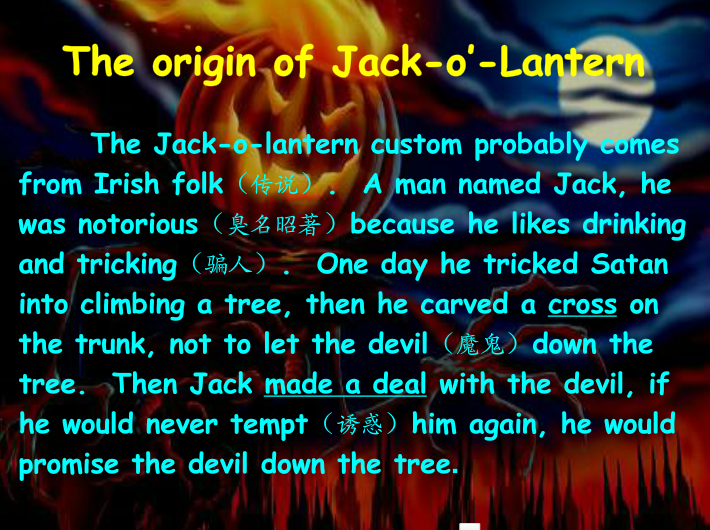
说到万圣节,就免不了联想到南瓜灯。南瓜灯的英文名是Jack-o'-lantern,让人不禁好奇,这Jack-o'-lantern里的Jack究竟是谁呢?为什么南瓜灯以他的名字命名呢?
根据牛津英语词典(Oxford English Dictionary)的记载,在17世纪,Jack-o'-lantern的本意是“一个提着灯笼的男人;守夜人”,在这里,Jack这个名字可以指代任何人,就像jack of all trades(万事通)里的Jack一样。到了1673年,Jack-o'-lantern这个词又被赋予了新的含义,指代户外出现的神秘亮光,也就是鬼火(will-o'-the-wisp)。
每年万圣节前夜制作灯笼的习俗起源于不列颠群岛(the British Isles),不过当时人们用的不是南瓜,而是大头菜(turnip)。后来在北美洲,人们发现南瓜更容易掏空,就选择了南瓜来做灯笼,渐渐地,Jack-o’-lantern就用来指代南瓜灯了。
Trick-or-Treating
不给糖,就捣乱
对于孩子们来说,万圣节最重要的的活动就是“trick or treat(不给糖就捣乱)”了,不过这个习俗也是后来才有的。虽然在20世纪早期,北美洲的年轻人就有在万圣节之夜穿奇装异服、雕刻南瓜灯的习俗,不过却没有挨家挨户讨糖果的说法。倒是在19世纪,苏格兰以及英格兰某些地区的孩子们有着guising(穿化装服并常带面具登门拜访)和souling(富人要向祷告者分发食物)的习惯。牛津英语语料库(Oxford English Corpus)中说道,trick or treat相当于guising的现代版。
Mischief Night
恶作剧之夜
虽说孩子们嘴里喊着“不给糖就捣乱”,但他们并不会真的做出什么坏事,一般来说,他们的家长都会陪在他们身边。相反,在北美洲,恶作剧会发生在万圣节之前的10月30日的夜晚,青少年们会砸南瓜,扔鸡蛋,用厕纸来装饰树木。
万圣节来源英文【五】:万圣节由来中英文
小编特别推荐
万圣节由来 | 万圣节传说 | 万圣节是哪天 | 万圣节习俗 | 万圣节英文 | 万圣节活动
小编今天摘取了万圣节流传最广的一种传说,中引文版的,和大家分享一下,希望您会喜欢!
The origin of Halloween
The legend of the origin of Halloween, there are many versions, the most common view, that is before the birth of Christ from the Medieval Western Europe countries, including Ireland, Scotland and Wales. This person called several of the Medieval Western Europe Druitt people. Druitt in the November 1 New Year, New Year's Eve, young people who set druid team, wearing all kinds of weird mask, carrying a carved radish good light (the late custom pumpkin light system, Medieval Western Europe first there is no pumpkin), they walk in the villages between. This was actually a kind of harvest celebration; also said to be "Halloween", the legend who died that year, the eve of Halloween spirit will visit the world, said that people should be allowed to visit the ghost that the ghost of a successful harvest and to render a hearty welcome. All fire and lights, the one to frighten away the ghost, but also for the ghost light line, to guide their return.
Central Europe in the Middle Ages, there had been destroyed by the pagan history of Christianity. However, before the ritual celebration of New Year's Eve never really eliminated, but in the form of witchcraft. This is why we are Halloween, but are also left witches broom, black cat, spells and other marks.
万圣节的由来
关于万圣节由来的传说有许多版本,最普遍的认为,那是源于基督诞生前的古西欧国家,主要包括爱尔兰、苏格兰和威尔士。这几处的古西欧人叫德鲁伊特人。德鲁伊特的新年在十一月一日,新年前夜,德鲁伊特人让年轻人集队,戴着各种怪异面具,拎着刻好的萝卜灯(南瓜灯系后期习俗,古西欧最早没有南瓜),他们游走于村落间。这在当时实则为一种秋收的庆典;也有说是“鬼节”,传说当年死去的人,灵魂会在万圣节的前夜造访人世,据说人们应该让造访的鬼魂看到圆满的收成并对鬼魂呈现出丰盛的款待。所有篝火及灯火,一来为了吓走鬼魂,同时也为鬼魂照亮路线,引导其回归。
在中世纪的中欧,曾有过基督教摧毁异教徒的历史。可是新年夜前的祭祀庆典从未真正消除,不过以巫术的形式出现。这也就是为什么我们现在的万圣节里,还留有巫婆的扫帚、黑猫、咒语等痕迹。
万圣节来源英文【六】:万圣节的由来50字英文
小编特别推荐
万圣节由来 | 万圣节传说 | 万圣节是哪天 | 万圣节习俗 | 万圣节英文 | 万圣节活动
万圣节是西方传统节日,小编今天跟大家介绍:万圣节的由来50字,让大家更深入地了解这个“洋节”。
万圣节的由来50字英文
第一种说法
The new year's Eve (including Ireland, and Welsh) in the ancient Western European countries (including Ireland, Scotland and), the new year's Eve, the Celtics (local people) so that the young people set team, wearing a variety of strange masks, carrying a good radish lamp (ancient Western Europe, the earliest no pumpkins), walk in the village.
The celebration of the autumn harvest is named for "Halloween", legend died that year, the soul will be at Halloween, visit the world, said that people should be let to visit the ghost to see a successful harvest, to the ghost and present a hearty welcome. In order to frighten away the ghost, but also for the ghost light line, to guide their return.
译文:古西欧国家(包括爱尔兰、苏格兰和威尔士)的新年在十一月一日,新年前夜,凯尔特人(当地人)让年轻人集队,戴着各种怪异面具,拎着刻好的萝卜灯(古西欧最早没有南瓜),游走于村落间。
当时是秋收的庆典,即"鬼节",传说当年死去的人,灵魂会在万圣节的前夜造访人世,据说人们应该让造访的鬼魂看到圆满的收成,并对鬼魂呈现出丰盛的款待。一来为了吓走鬼魂,同时也为鬼魂照亮路线,引导其回归。
第二种说法
Five hundred BC, living in Ireland, Scotland and other places of the Celtic people to move forward this day, that is, October 31st.
It is believed that the spirits of the enemy in the day returned to the former residence of find creatures, take this regeneration, and this is man can obtain the regeneration the only hope in after death. And the living fears the dead soul to seize lives, so people will extinguish the fire, candlelight in the day, so that the soul can not find the living dead, and the himself dressed as ghosts and goblins to scare away the dead souls.
After that, they will be the fire of the candle lit again, starting a new year of life.
译文:公元前五百年,居住在爱尔兰、苏格兰等地的凯尔特人把这节日往前移了一天,即10月31日。
人们相信,故人的亡魂会在这一天回到故居找寻生灵,借此再生,而且这是人在死后能获得再生的唯一希望。而活着的人则惧怕死魂来夺生,于是人们就在这一天熄掉炉火、烛光,让死魂无法找寻活人,又把自己打扮成妖魔鬼怪把死人之魂灵吓走。
之后,他们又会把火种烛光重新燃起,开始新的一年的生活。
第三种说法
The Celtics were very afraid of the night of October 31st, because they felt that this night, there was a pile of evil spirits lurking in any place. They at home fire to let those evil spirit leave their homes, they believe that the sun god calls the deceased person. They believed that the sun god dead variable for other things, like a cat.
The Celtics would pretend to be a terrible disguise to get rid of the evil spirits. (this is the prototype of Halloween) after Roman occupation of the land of Celtic, Roman holiday and the Celtics October 31, Samhain Festival together, it becomes the Halloween.
译文:凯尔特人非常害怕10月31日的夜晚,因为他们觉得这晚,有一堆邪恶灵魂潜伏在任何地方。他们在家生起火来让那些邪恶灵魂离开他们的家,他们相信是太阳神把死人叫出来的,他们还相信太阳神会把死人变为其他东西,好像猫。
凯尔特人会装着可怕的伪装来把那群邪恶灵魂赶走。(这就是万圣节的原型)后罗马占领了凯尔特人的土地,把罗马的节日和凯尔特人10月31日的Samhain祭典合在一起,就成了现在的万圣节。
延伸阅读:万圣节英文祝福语
1.You never know what might happen on Halloween. Wait until dark for some spooky surprises. The creatures of the night are waiting. To my dear pal, have a howling Halloween!
2.Trick or treat what it will be? Wishing you a happy Halloween!
3.My Halloween's happy when I freak out with you! Happy Halloween to you my friend!
4.It’s hell lot of fun when I'm with you! Happy Halloween to you!
5.Hope your Halloween is masked with spooky fun just as mine.
6.Thank you for your very special wish. Happy Halloween!
7.Thank you for making my Halloween so special.
8.Thank you for making my cauldrons full of fun! Happy Halloween!
9.Your smile lights up our world! Wishing you a Halloween bright and glowing as you are!
10.It’s Halloween time to dress up in your spookiest best and grab all the fun! Hope it‘s lit up with smiles for you! Happy Halloween!
11. Trick or treat what it will be? Wishing you a happy Halloween!
12. Thank you for your very special wish. Happy Halloween!
13. Thank you for making my Halloween so special.
14. Thank you for making my cauldrons full of fun! Happy Halloween!
15. Your smile lights up our world! Wishing you a Halloween bright and glowing as you are!
16. My Halloween's happy when I freak out with you! Happy Halloween to you ...my friend!
17. It's hell lot of fun when I'm with you! Happy Halloween to you!
18. Hope your Halloween is masked with spooky fun ... just as mine.
19.Thank you for your very special wish. Happy Halloween!
20.Dark castle, wearing old moon roof, bat wings and cut through the night … this time the doorbell loud, do not be afraid, ready your candy, or child care to mischief night Oh!
推荐阅读:
万圣节英文故事
关于万圣节的英文介绍
关于万圣节的英文词汇
万圣节英文手抄报
万圣节来源英文【七】:万圣节来历 中英文
小编特别推荐
万圣节由来 | 万圣节传说 | 万圣节是哪天 | 万圣节习俗 | 万圣节英文 | 万圣节活动
下面是由整理的《万圣节来历 中英文》,欢迎阅读。
Im Oktober ist Hochsaison für Hexen, Gespenster, Geister und alle, die sich gerne Gruseln, denn am 31. Oktober ist Halloween.
十月是女巫,幽灵,鬼魂和一切让人不寒而栗的东西出现的旺季,因为10月31日是万圣节。
Ursprünglich, vor Hunderten von Jahren, war Halloween ein Herbstfest der Druiden im alten England. Es sei die einzige Nacht des Jahres, so glaubten die Menschen damals, in der Hexen und Geister leibhaftig auf der Erde herumspukten.
起初在几百年前,万圣节在古英格兰对巫师们来说是秋天节。那时人们认为,这一天晚上是一年当中唯一一个女巫和鬼魂真的来到人间到处作祟的夜晚。
Fast jedes Kind weiß, dass Halloween etwas mit Gespenstern, Hexen und Verkleiden zu tun hat, aber kaum jemand hat eine Ahnung, was es mit dem Fest ‚Halloween’ nun wirklich auf sich hat.
几乎每个孩子都知道,万圣节与幽灵,女巫和化装有关,但是几乎没有一个人知道,万圣节这个节日究竟因何而来。
Schon vor über 2000 Jahren feierten die Kelten im alten England (heute sagen wir Großbritannien dazu) zum Ende des Sommers ein großes Fest – damals hieß es noch ‚Samhain’. Der 31. Oktober war bei den Kelten der letzte Tag des Jahres, denn sie hatten einen anderen Kalender als wir heute. Der Sommer wurde mit großen Feuern verabschiedet und gleichzeitig der Winter begrüßt. Die Menschen bedankten sich bei ihrem Sonnengott (mit Namen ‚Samhain’) für die Ernte, die sie in der warmen Jahreszeit eingebracht hatten und gedachten an diesem Tag auch der Seelen der Verstorbenen. Der Sonnengott wurde nun, zu Beginn der dunklen Winterzeit von dem keltischen Gott der Toten, abgelöst.
早在两千多年前,古英格兰(今天的大不列颠)的克勒特人在夏季结束时会进行一场盛大的节日庆祝——那时这个节日叫做“萨温节”。对于克勒特人来说,10月31日是一年的最后一天,因为他们使用的年历与我们今天的不同。人们燃起大火告别夏季,同时欢迎冬季的到来。他们向太阳神(名字为“Samhain”)表示感谢,感谢其赐予的温暖季节带来丰收,同时也在这一天悼念逝者的亡灵。而后太阳神就在阴暗的冬天开始之时被克勒特人的死亡之神所替代。
Die Kelten glaubten fest daran, dass die Seelen der Verstorbenen in der Nacht vom 31. Oktober als Geister auf die Erde zurückkommen, um in ihre Häuser zurückzukehren. Aber was war mit den Geistern und heimatlosen Seelen, die trotz der großen Feuer, die am Wegesrand entfacht wurden, den Weg nicht fanden und verzweifelt umherirrten? Von ihnen war nichts Gutes zu erwarten, sie spukten durch die Nacht, erschreckten friedliche Menschen und trieben ihr Unwesen mit ihnen.
克勒特人坚信,逝者的亡灵在10月31日会变成鬼魂来到人间,回到自己家中。但是那些即使在路边点着旺火却也找不到路而绝望地四处乱走的鬼魂和无家可归的亡灵怎么办呢?别指望他们做什么好事,他们会整晚捣乱作祟,惊吓平和中的人们,到处胡作非为。
Einige Jahrhunderte später, ungefähr 800 Jahre n. Chr., ernannte der Papst den 1. November, also den Tag nach dem 31. Oktober, zum Feiertag ‚Allerheiligen’, an dem der christlichen Märtyrer gedacht wurde. Aus dem Samhain- Fest wurde im Laufe der Zeit ‚das Fest am Vorabend zu Allerheiligen’, und das heißt auf englisch ‚All Hallows’ Evening’ oder abgekürzt ‚Hallows’ E’en’. Inzwischen sagen wir Halloween.
几百年后,大约公元800年的时候,罗马教皇将11月1日,也就是10月31日后一天,作为“万圣”之节,在这一天人们会怀念基督教的烈士。随着时间的推移,英国人根据萨温节就把11月1日的前夜变成了庆祝万圣的节日,而英语里万圣夜称作“All Hallows’ Evening”,简称Hallows’ E’en。渐渐地我们就把万圣节叫做了Halloween。
Obwohl das Samhain-Fest schon so lange her ist, verkleiden sich die Kinder heute noch als gruselige Gestalten, wie Gespenster, Hexen, Zauberer oder Vampire, um Geister abzuschrecken. Und das ist auch gut so – denn wer weiß denn schon genau, ob die Kelten im alten England nicht doch recht hatten......?
虽然萨温节已如此古老,今天的孩子们还会装扮成毛骨悚然的形象,像是幽灵,女巫,男巫或是吸血鬼去吓退鬼魂。不过这样也不错——谁又清楚地知道,古英格兰的克勒特人是不是有道理呢?
推荐阅读:万圣节由来万圣节南瓜万圣节祝福语